Tuesday, November 30, 2010

"Working Progress"


How do you get the momentum of work flow going in your studio?  What warms up the creeping coldness that you sometimes naturally encounter? As artists we can't help but experience feeling hot and cold.  Whatever your cirumstances, life brings lots of distractions, sometimes stress, tension, pressures and anxiety. 


In the past few months I've relocated to a new city.  I have traveled between my  live/work loft space in Los Angeles to San Francisco for work/  family time.  It has been a smooth transition outwardly with everything falling into place easily, but the internal adjustment has interferred with working steadily in the studio.  


It's natural  for conflict to set in  between life and art when major transitions happen.  In reflecting on my process lately, I realize  a strong need for longer periods of solitude in order to settle in.  The environmental adjustment and transition carries weight, but I have been persistent  in pushing through by showing up in the studio.


There have been incremental productive sessions but mostly  chaos, studio messes, many mistakes, ruined materials, starts and stops, and frustration.  I realized several days ago that you must embrace the visceral sense that you can't skip the parts of the process!  When it doesn't work out, you can't be attached.  This attachment and disappointment brings on the coldness.  Persistence and patience can feel unbearable at times especially when you know the work is wanting to move somewhere else.  


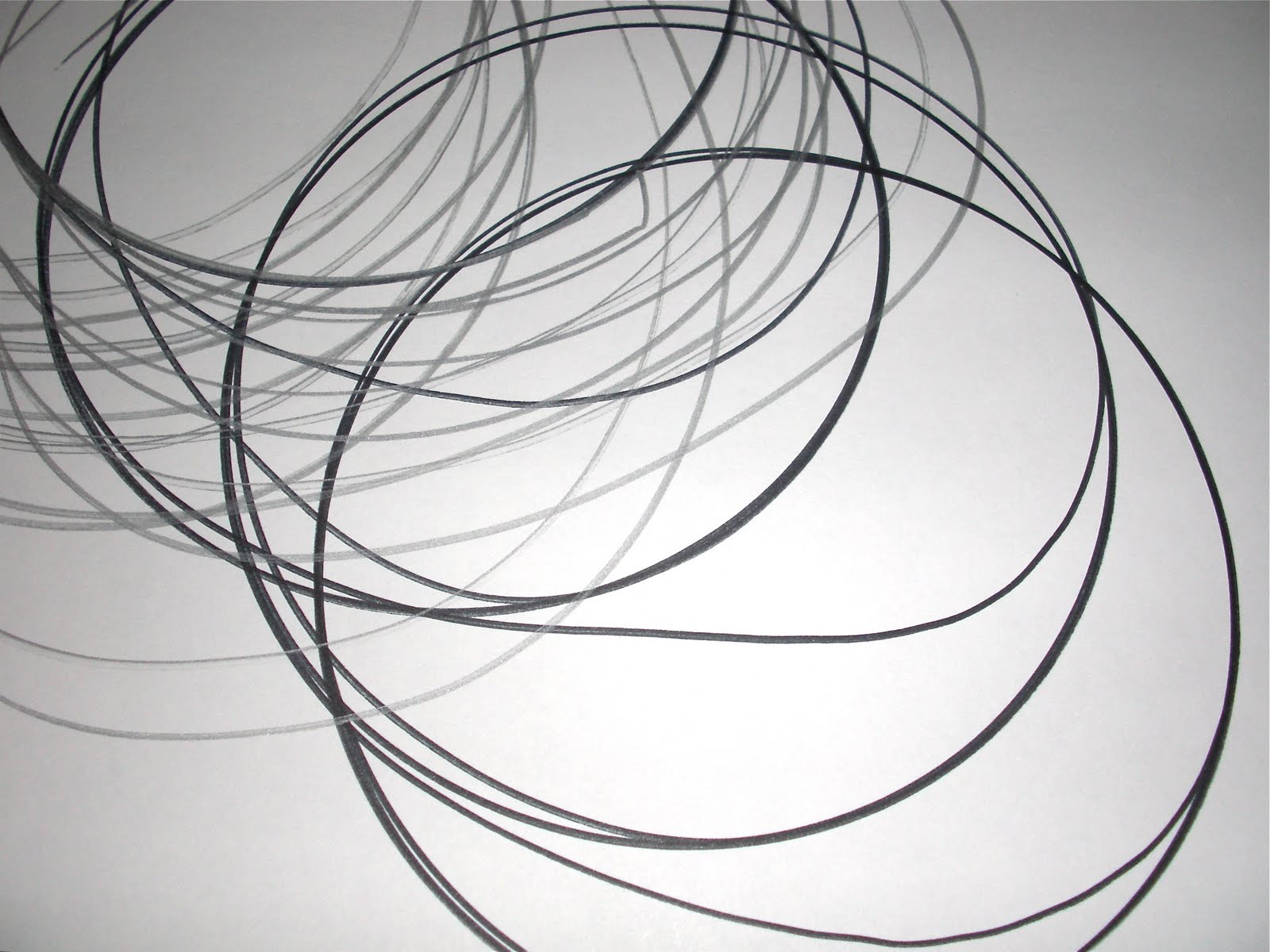
If you have a ritual that helps you get back to picking up the  thread, or to the place that helps you enter the zone of working, then do it.  I have my ritual and it's simple.  "Circles".  That's it.  When I'm stuck, I make circles with whatever is near -- pens, pencils, paints, crayons.   It symbolized the circular flow of life.  I do it for hours, days, weeks -- until I don't want to do circles anymore.   And then, I shift.  It's a form of warming up when nothing is calling me yet.  I call my freeze an  'alienation from self'.  This  temporary disconnect that happens can disengage one from the artmaking process.  


Here are some progress shots of working -- keeping the tension outside the studio and turning my full attention to engage with the work.  


This is the first post from my new place at the SFAC - Santa Fe Artist Colony!  I will  be getting back to this blog regularly and hope you'll stay tuned!  


Author, Joan Didion’s “Slouching Toward Bethlehem,” --  excerpt from her "Self Respect" essay. 
It is the phenomenon sometimes called “alienation from self.” In its advanced stages, we no longer answer the telephone, because someone might want something; that we could say no without drowning in self-reproach is an idea alien to this game. Every encounter demands too much, tears the nerves, drains the will, and the specter of something as small as an unanswered letter arouses such disproportionate guilt that answering it becomes out of the question. To assign unanswered letters their proper weight, to free us from the expectations of others, to give us back to ourselves – there lies the great, the singular power of self-respect. Without it, one eventually discovers the final turn of the screw: one runs away to find oneself, and finds no one at home.

Thursday, July 22, 2010

"Engaging Analog Drawings"


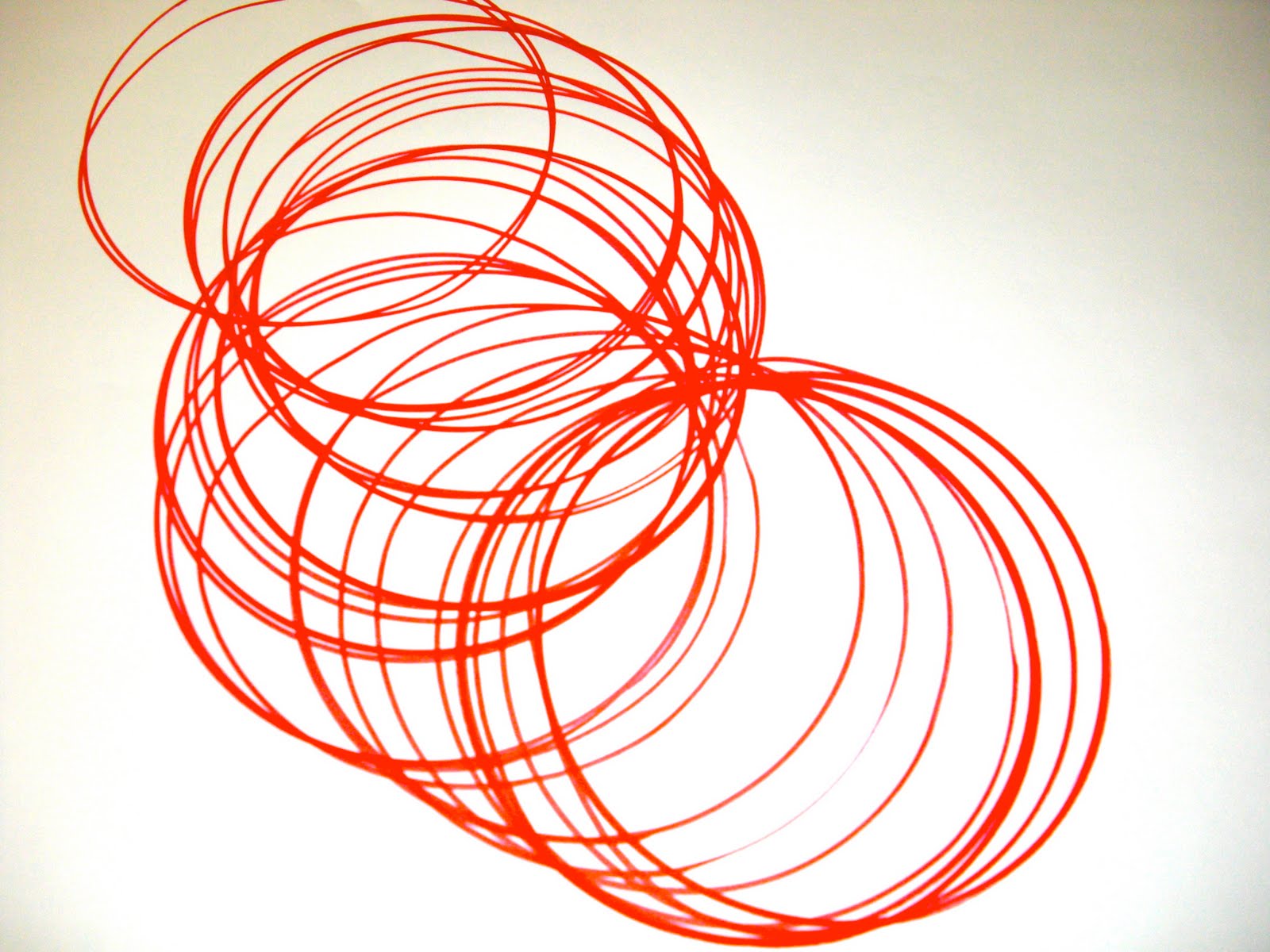
These are some of my 18"x 24" Analog Drawings made today non-stop one after another.   In total I drew 30 of them within a 4 hour session.  This is an exercise you can use to engage yourself back into working when you catch yourself obsessing over things which are unproductive.  

An analog drawing is a symbolic drawing expressing one's emotions, ideas, and feelings, often used to identify and help solve problems.  Betty Edwards (author of "Drawing on the Artist Within") calls this kind of automatic drawing "analog drawing." Whereas automatic drawing is about nothing in particular - just whatever the hand draws - an analog drawing is about a specific feeling.  It's still a completely free drawing. You just pick up a soft pencil and watch the marks your hand and pencil make on the paper. You're releasing all control.  (In my session today I used marking pens, crayons & colored pencils). 


The charged emotion in silencing creativity is "anxiety".  As artists, we have our individual coping mechanisms dealing with anxiety that take us away from working.  We sometimes call them "distractions" and they appear quite regularly in our daily life.    

Feeling tired of the business of working on non-art related details and attending to family affairs has created an imbalance in my world!   I am appreciating what small workspace I had and finding out how important making art really is in my life.   


Are you aware of feeling low, unproductive and  maybe obsessing?   Those thoughts.... large or small?  Obsessing over stuff -- the lighting in the studio, the location, the city,  the materials,  sensitivities, rejection, the work, bad review, finances -or---- maybe distracting with social media, television, controlling others (haha!), or overdoing in some area other than in the studio?  There are always more things that clog up our mind than we'd like to admit --and these thoughts create worry, anxiety and loss of focus.  


Can you get a grip on your mind and let go of small thoughts?  Eastern philosophy and Western psychology have both addressed the issues of the 'mind' and taming it through regular meditation, relaxation techniques, Yoga, physical exercise to gently bring the mind and thoughts back to center and back to our comfort zone.  

Are you finding it challenging to return to a comfortable place in life due to changing situations good or not so good?  Sometimes it happens you know  -- and a drag to admit!  Do you have a practice or discipline to commit to your working sessions whether you're making fantastic work or feeling bored, tired, uninspired, frustrated, or anxious?


At the moment I am living a very unstructured life and very busy with the long and lingering details of my upcoming move to another city.   The absence of routine for a certain length of time can become unnerving.  My weeks are consistent for only one week at a time -- flipping from one home-base to another!  I found myself obsessing over the frustration of not being able to paint!  After a week of ignoring the urge to do something, today I made up my mind that I would engage in a positive obsession -- sketching anything that came to mind (analog drawings)!  Fueled by the desire to paint, I shut out the anxiety  (and pressure to make studies)...and with much patience I reached the trance state of working.  It doesn't necessarily happen with only doing important or meaningful work.  It happens when we engage long enough to let it happen.  Not different than the state of watching our in and out breath during meditation and floating in that space between the breath or that space between our thoughts.  


I combined the technique of using Analog Drawings with a non-stop drawing session where you continue to work with a stack of paper and drawing tools for a specific amount of time.  In most analog drawing sessions you use a soft pencil and a smaller sheet of paper for direct problem solving (and usually in smaller increments of time).   In these drawings there is a spiraling affect of chaos and order, attempt at a new pattern emerging,  energy going up and down, harmony & complexities in color usage,  tightness in the loops, going thru a tunnel with twists & turns, and some looping out of order which signals the upcoming changes in the next chapter of my life.  


Can you differentiate what drags you away from the work?  Paying attention to your responses and taking action leads us back to the same 'ole cliche -- - "showing up"!   


Thanks for stopping by and reading about my process.   Your comments here are always welcomed and appreciated!  

You may want to engage yourself in a 'free' non-thinking analog drawing session!  It's a good way to produce energy to revivify your work...and it helps one sift through unproductive thinking.  

If you're living a confiscated life --- Jung says....

"It would be far better simply to admit our spiritual poverty...
when spirit becomes heavy, it turns to water...
Therefore, the way of the soul...leads to the water."


Monday, July 12, 2010

"Getting It On - Graphic Studies"


Sometimes you accidently face the ideas that keep resurfacing while you're working.  Today I spent the afternoon sketching for several hours on the deck of my daughter's new home.  Living without a studio for over a month now, I'm beginning to feel a buildup of stored energy -- missing my studio discipline.  However, I am feeling pretty smart that I stocked 2 small pencil and pen boxes filled with Faber Castell's Soft Supracolor Pencils, PITT Artist Pens, Aqua Creta Colors, Caran d'Ache Painting Crayons, Wax Pastels,  favorite Prisma sharpener, water pens,  graphite pencils and the Tri Tip eraser!  Yes, I'm happy I have something to draw, sketch and paint with!  This withdrawal is pushing me into strange territory and bringing good information!  
  
I am missing the daily routine of painting and the physicality of the action.  I wouldn't call myself an "action painter", but working in multi-media (Encaustic, Oils & Acrylic) stimulates the need for dynamism while working.  This place of loss and gain forces you to become acquainted with your true circumstances.  

In this transition,  the process is bringing me to the "thinking" place.  My usual working method is intuitive, and the only preparation that takes place is the setting up of materials and my love of mixing paint -- creating polychromatic palettes-- a large part of my drive. I enjoy the alchemical process of experimenting with materials and expanding the possibilities.  

This slowing down is quite different from a "block".  I find myself thinking every day about painting and discovering clarity through working within my sketchbooks and sketchpads.  It's definitely presenting another chance to understand my process and my relationship with my process.  

It became apparent today that I have been exploring my paintings through the lens of photographing them whole and then in quadrants as well as taking oblique shots of the work.
My camera has been a great outlet lately and I am seriously looking at digital SLR cameras!
I watch myself sketching from my sketches!  Observing the aerial or tilt angles.  Just today I remembered an early childhood memory--  watching my Dad drafting --  technical mechanical drawings.  Watching him in production-- creating layouts, lines, dimensioning, text symbols, grids, etc.  I was indeed mesmerized at his talent.  He taught me how to hand-draw 2-D boxes, houses and rectangles.  I can't remember how to draw them now.  But -- something new is happening in my paintings and my relationship to them.  


Somehow the word, "perceptual" entered my mind as I was working long and digging in with my crayons and pencils today.  The trance-state of working is pure joy!  Working effortlessly and emerging hours later -- voila!   You have a little increment of work and it's even possible to appreciate the work without any self-consciousness.  (Op Art crossed my mind but feeling resistant to it.  No judgements or intellectualizing (too much) -- just, "get it on" and see what comes around!  

According to Wikipedia:
Perceptual art is a form of art that can trace its roots to the art history concepts of perceptualism as well as to twentieth century inventions of conceptual art and performance art.

In practice, perceptual art may be interpreted as the engagement of multi-sensory experiential stimuli combined with the multiplicity of interpretive meanings on the part of an observer. Sometimes, the role of observer is obscured as members of the public may unwittingly or unknowingly be participants in the creation of the artwork itself.

The concept of perceptualism has been discussed in historical and philosophical explorations of art and psychology, thus it forms an innate relationship between the artist and philosopher


Op art, also known as optical art, is a style[1] of visual art that makes use of optical illusions.
"Optical art is a method of painting concerning the interaction between illusion and picture plane, between understanding and seeing."[2] Op art works are abstract, with many of the better known pieces made in only black and white. When the viewer looks at them, the impression is given of movement, hidden images, flashing and vibration, patterns, or alternatively, of swelling or warping.


There's something exciting about finding your trance-state while making sketches and knowing you can just tear out the page, crumple it up and toss!  There's little investment but sometimes much to gain!   I am coming to understand much about where my early influences began.  

Whether you're inside or outside of your work, ready to engage or escape, stay with the best part -- even if it's a small corner!  Getting it on with 'graphic studies' is my little corner for now --
moment to moment.  

"Between each fruitful phase are long
periods of exploration, faltering, learning,
and working things out."
                 ____Kenneth Noland